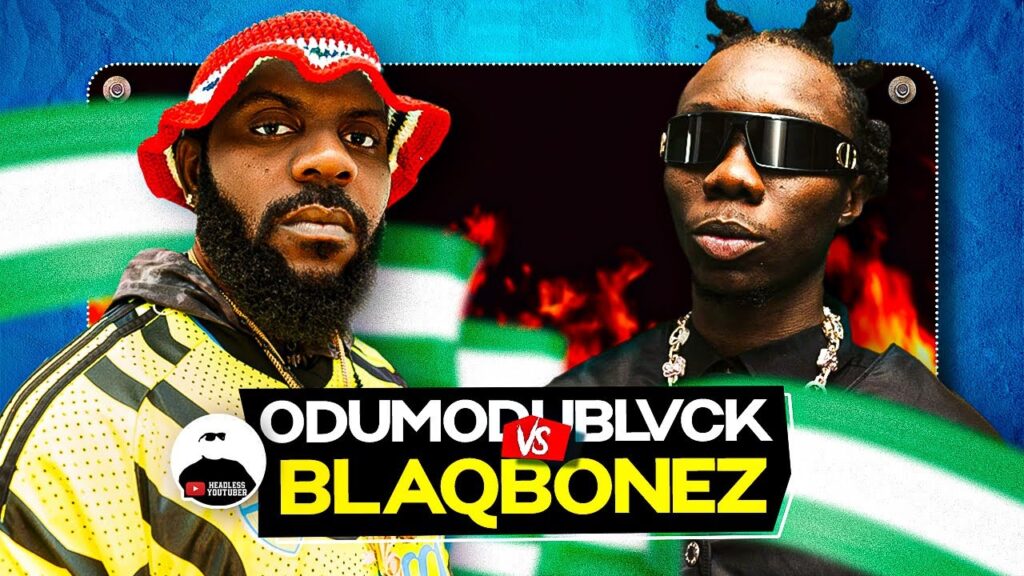
If Nigerian hip-hop had a soap opera channel, this week’s headline would read like a cliffhanger: a surprise diss clip from Dabu the Gemini aimed at Blaqbonez, fresh flames from Blaqbonez’s album track “ACL” aimed back at Odumodublvck in light of their existing rap beef, and social media threads full of threats, old grudges and fans choosing sides like it’s football season. But beyond the memes and punchlines, there’s a dangerous undercurrent: rumours that the dispute could spill off-mic and into actual violence. That’s the part that should make anyone who loves the culture uneasy.
The timeline — quick and messy
Over the last week, the public pieces fell into place like a fever dream. Blaqbonez’s recent project and visuals — most notably the record “ACL” — reopened a simmering feud with Odumodublvck, turning subliminals into full-blown lines that callers in our culture instantly read as direct shots. Media outlets and reaction videos sparked a significant online conversation about the record. Not long after, Dabu the Gemini dropped a raw diss clip aimed at Blaqbonez that circulated rapidly on X and Instagram, where snippets and reaction reels have done much of the oxygen-feeding.
That viral nature matters: short clips, DM screenshots, and reaction content compress the back-and-forth into snackable drama — but they also strip nuance and make escalation more likely. A line meant to land as a clever bar can look like a personal provocation when looped in a 30-second clip and captioned “He crossed the line.”
Where the danger lives: from DM receipts to “they tried to attack”
What makes this rap beef more than just rap-theatre is the allegations circulating that confrontations have already occurred offstage. Posts attributed to members of Blaqbonez’s camp claim Odumodublvck’s entourage “tried to attack” the rapper in Lagos, Uyo and even London, and that there were heated on-location incidents involving team members and managers. Those accusations — still contested and largely coming from camps or secondary outlets — are the type of claims that morph quickly into “we must respond” mentality. If true, they change the math from lyrical sparring to security risk. Either way, journalists and fans should insist on verified facts rather than rumours; the gap between allegation and proof is where reputations and safety both get wrecked.
Labels, loyalty and the strange neutral dance
A recurring pattern in Nigerian music culture is how labels react — or don’t. When rap beef heats up, the label (or “camp”) statement matters because it either cools things down or adds fuel. Right now, there’s a patchwork of official reporting, camp claims and social-media proclamations. That leaves room for speculation: are collectives posturing to protect brands, or are they silently complicit? Fans, who love binary narratives, pick sides fast, and that social pressure forces artists into postures they don’t always mean to stay in.
The artistry: punchlines are fun — but context counts
From a craft perspective, this is exactly the kind of moment that brings out rap’s best weapons — clever metaphors, narrative heat, and crowd-pleasing takedowns. Blaqbonez’s approach on “ACL” is textbook modern Nigerian rap aggression: witty, pointed, and designed to land on X and in reaction videos. Dabu’s diss — short, sharp and viral — plays into that ecosystem. For fans of punchline rap, it’s delicious. For the rest of us, it’s a reminder that art in a tense context can be misinterpreted as a provocation to physical conflict.
ICYMI: From Bars to Business: How Battle Rap in Nigeria is Monetising Like Never Before
What the culture loses when beef goes beyond bars
If a rap beef moves from the studio to the street, the whole culture loses. Young artists model what they see; labels and promoters face legal and moral fallout; venues and sponsors start to put distance between themselves and rap shows; and ultimately, the music — the product — gets collateral damage. We’ve seen how a single viral video can alter a tour plan or an endorsement overnight. The cleverness of a diss line is not worth blood or arrests. This is where the community — artists, managers, label execs, journalists — must intervene and insist on studio battles, not street ones.
A call to cooler heads (and a few hard truths)
- Verify before amplifying. Screenshots and hot takes light the signal fire; journalists and influencers should demand receipts that pass scrutiny before sharing allegations of physical attack.
- Labels must act responsibly. If there are real threats, management and labels need to step up with clear public safety messaging and, if necessary, legal action rather than press games.
- Fans: pick bars over brawls. Support your rapper’s craft, not violence. Most legendary rap wars live on wax — that’s where legacies are made.
- Artists: own the stage, not the street. Diss tracks and rebuttals are part of rap’s DNA. Keep it on record where skill decides winners, not fists.
Final thought — who wins?
On paper, virality and attention look like wins: trends spike, streams rise, and mentions multiply. But attention gained alongside violence, threats or genuine fear is a shallow victory. Real respect in hip-hop comes from sustained craft, not headline stunts. If Dabu’s clip or Blaqbonez’s “ACL” forces sharper bars from either side, great — let the music decide. If it forces a physical encounter, the whole scene becomes the loser.
I’m watching the timelines, the DMs and the press statements. I’m rooting for better bars, smarter moves and cooler heads. Because at the end of the day, the culture’s endurance matters more than the next retweet.
— BigDan, The HipHop Journalist